◀ 5 min read
Butterfly Valve vs Ball Valve: Which is right for your process?
Pressure class, media, space and cost all play a role. We break down exactly when to use each type.
Read article ›Home / Knowledge Centre
Technical resources
Practical guides from our engineering team — helping process plant buyers select, size and specify the right valve for their application.
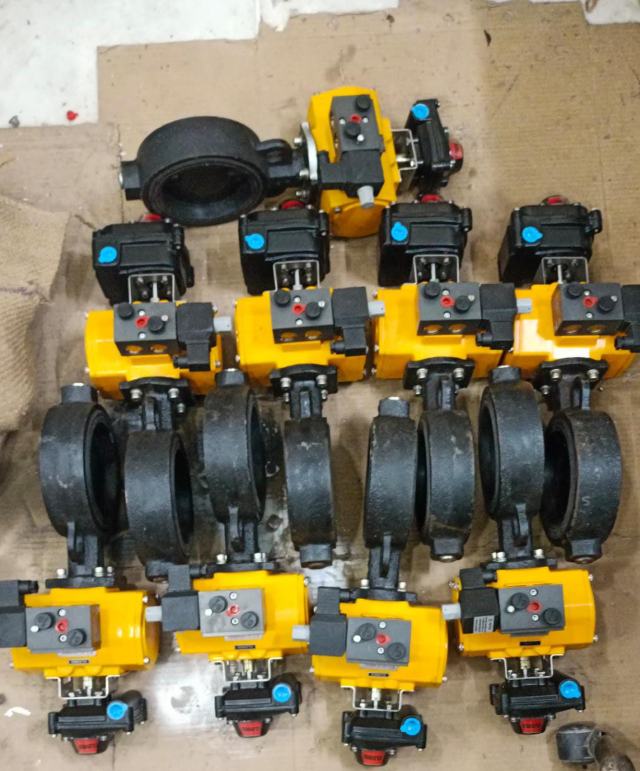 01Valve Selection
◀ 5 min read
Pressure class, media, space and cost all play a role. We break down exactly when to use each type.
Read article ›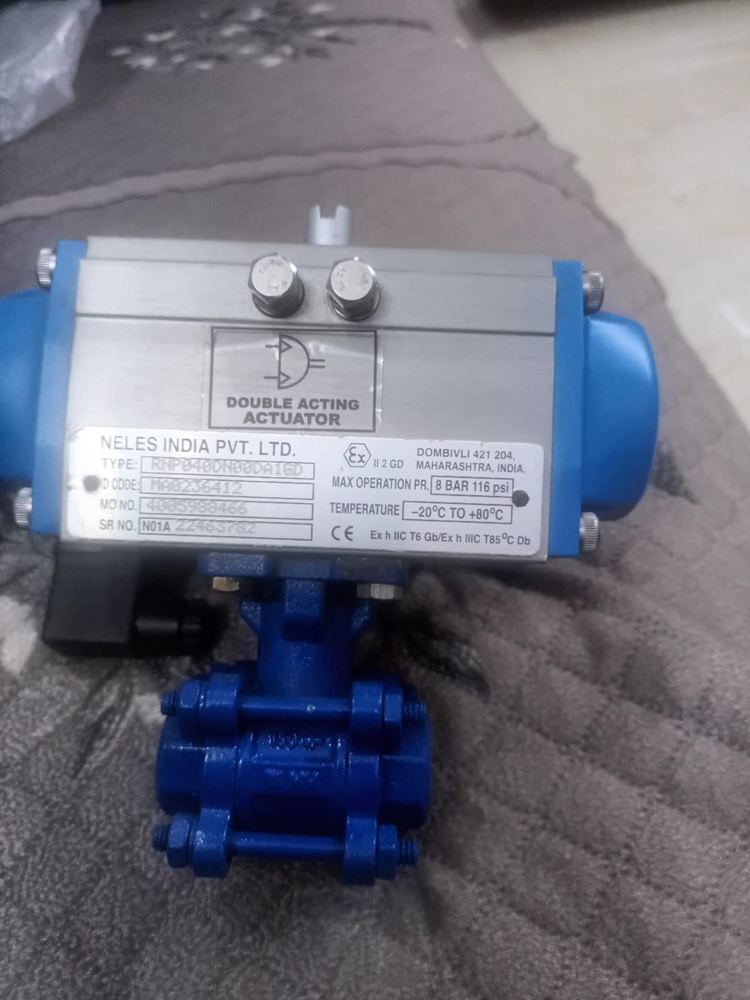 02Actuator Sizing
◀ 7 min read
Cycle time, fail-safe requirement, air supply availability — the key factors explained clearly.
Read article ›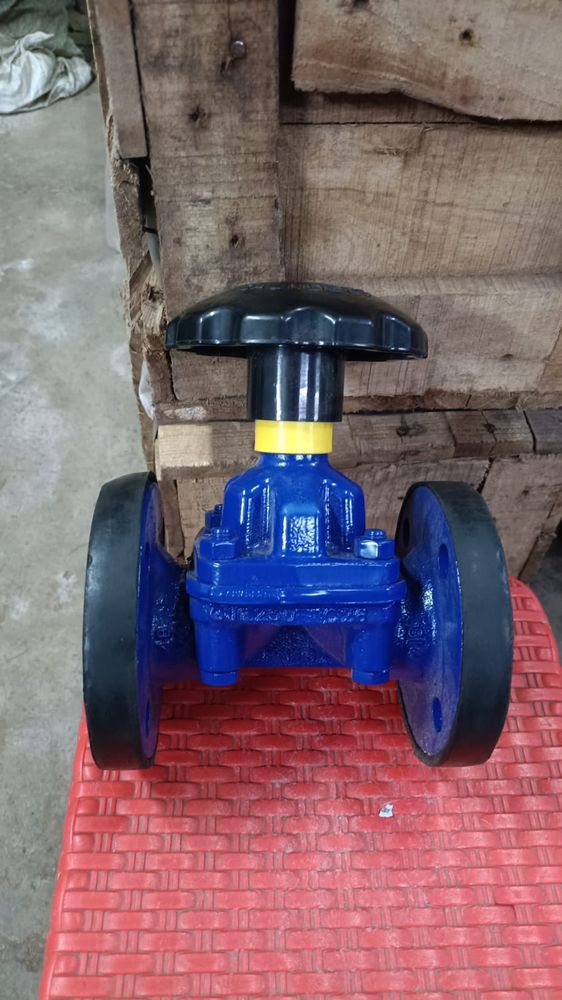 03Solenoid Valves
◀ 6 min read
Media compatibility, orifice size, coil voltage and IP rating — getting these wrong is expensive.
Read article ›Two of the most common isolation valves in process plants — and yet engineers still frequently specify the wrong one. The consequences range from unnecessary cost to premature failure, excessive pressure drop or — in the worst case — a valve that doesn't hold up in service at all.
Here is how to choose correctly, based on the parameters that actually matter.
A ball valve uses a rotating sphere with a through-bore to control flow. When fully open, the bore aligns with the pipe and presents essentially zero obstruction — giving very low pressure drop and true full-bore flow. The seat and ball must seal against each other at line pressure.
A butterfly valve uses a rotating disc that sits in the flow path even when open. This means there is always some obstruction and a higher pressure drop. However, butterfly valves are mechanically much simpler, require less torque to operate at larger sizes, and cost significantly less in larger diameters.
| Parameter | Ball Valve | Butterfly Valve |
|---|---|---|
| Typical size range | DN15–DN200 | DN50–DN2000+ |
| Pressure drop (full open) | Very low (full bore) | Moderate (disc obstructs) |
| Shut-off class | Class VI (bubble-tight) | Class IV–V (double eccentric) |
| Cycle life | High (100,000+ cycles) | Moderate–high |
| Relative cost (large bore) | High | Low |
| Throttling suitability | Poor | Good (with double eccentric) |
| High pressure service | Excellent | Limited (standard designs) |
Both ball and butterfly valves can be supplied PTFE or FEP-lined for corrosive acid and alkali service. In lined configurations, the butterfly valve offers a significant cost advantage at larger sizes. For very aggressive media at higher pressures, however, the lined ball valve remains the more reliable choice because the liner is less stressed.
Both valve types are equally suitable for pneumatic or electric actuation. The choice of actuator type (and its torque rating) will differ — ball valves typically require higher breakaway torque than butterfly valves at the same line pressure. Always ask your manufacturer to confirm the actuator sizing against actual line pressure, not just nominal ratings.
Send us your line size, media, pressure and temperature — we'll specify the right valve and confirm the actuator sizing at no cost.
Choosing the wrong actuator type is one of the most common — and most costly — mistakes in valve automation. An undersized actuator will fail to stroke the valve at line pressure. An oversized one wastes energy and puts unnecessary stress on the valve stem. And choosing pneumatic when you have no reliable instrument air supply guarantees a maintenance headache.
Here is the structured approach our engineers use when specifying actuated valve assemblies.
Every actuator must be sized against the valve's breakaway torque — the force needed to unseat and begin moving the valve disc or ball from its closed position under line pressure. This is not the same as running torque and it is always higher.
A common mistake is to use the valve manufacturer's torque table at zero differential pressure. Always calculate at your actual maximum differential pressure, and then apply a safety factor of at least 25–30% on top.
| Criterion | Pneumatic Actuator | Electric Actuator |
|---|---|---|
| Power supply | Instrument air (4–7 bar) | Electrical (24VDC to 415VAC) |
| Cycle speed | Fast (seconds) | Slower (10–60 seconds typical) |
| Fail-safe action | Simple spring-return | Requires battery/capacitor backup |
| High cycle duty | Excellent | Heat build-up limits cycle rate |
| Explosion-proof | Inherently safe | EEx certified units available |
| Modulating control | With positioner (excellent) | With positioner (excellent) |
| Remote location (no air) | Not suitable | Preferred |
| Relative cost | Lower | Higher |
For any safety-critical valve, the fail-safe action must be defined before selecting the actuator: should the valve fail open, fail closed or fail in last position on loss of power or air?
For pneumatic actuators, spring-return provides reliable fail-safe action without any additional components. For electric actuators, fail-safe requires a battery pack or capacitor bank — which adds cost and requires maintenance.
Send us your valve size, type, line pressure and fail-safe requirement — we'll calculate the correct actuator torque and recommend the right unit with a safety factor.
Solenoid valves are among the most frequently mis-specified components in a process plant. They are simple in concept but the selection involves more parameters than most buyers realise — and getting them wrong means early failure, leakage or a valve that simply won't open under line pressure.
Ask yourself these five questions before placing any solenoid valve order.
The media flowing through the valve determines the body material, seal elastomer and whether a direct-operated or pilot-operated design is appropriate.
This determines whether you need a direct-operated or pilot-operated design — and it is the single most common source of solenoid valve failures.
Direct-operated valves use the solenoid force alone to open the orifice. They work from zero bar differential pressure upwards and are suitable for low flow, small orifice applications. Pilot-operated valves use line pressure to assist opening — they are far more common for larger orifices but require a minimum differential pressure (typically 0.5 bar) to function. Ordering a pilot-operated valve for a gravity-flow line with near-zero differential pressure will result in a valve that fails to open.
The flow coefficient Cv determines how much flow the valve passes at a given differential pressure. An undersized Cv creates excess pressure drop; an oversized Cv wastes money and may cause control instability. Calculate your required Cv from your flow rate and differential pressure — your manufacturer should be able to confirm this for you.
A 2/2-way (2-way) solenoid valve has one inlet and one outlet — it either opens or closes the flow path. This is the most common type for on/off isolation duty.
A 3/2-way (3-way) solenoid valve has three ports — typically used to pilot pneumatic actuators (supply pressure to one side, exhaust the other) or for diverting flow between two outlets.
A 5/2-way solenoid valve has five ports — the standard pilot valve for double-acting pneumatic actuators, providing supply and exhaust to both sides of the actuator cylinder.
Send us your media, pressure, temperature, flow rate and coil voltage — we'll recommend the correct solenoid valve and confirm the Cv calculation at no cost.